Open any beginner Spanish textbook and you will probably find a vocabulary list organized alphabetically or by chapter. A random assortment of words thrown together because they happened to appear in the same lesson. “Abogado” (lawyer) next to “agua” (water) next to “almohada” (pillow). No connection, no context, no logic.
Your brain hates this. It does not store words in alphabetical order. It stores them in semantic networks: clusters of related concepts that activate together. When you think “kitchen,” your brain does not jump to “kite.” It activates stove, fridge, table, cook, eat, plate, and every other concept linked to that mental category.
Learning vocabulary by topic leverages this natural architecture. Instead of fighting how your brain works, you work with it. The result is faster acquisition, stronger retention, and vocabulary that is actually usable in real situations. Here is why it works and exactly how to do it.
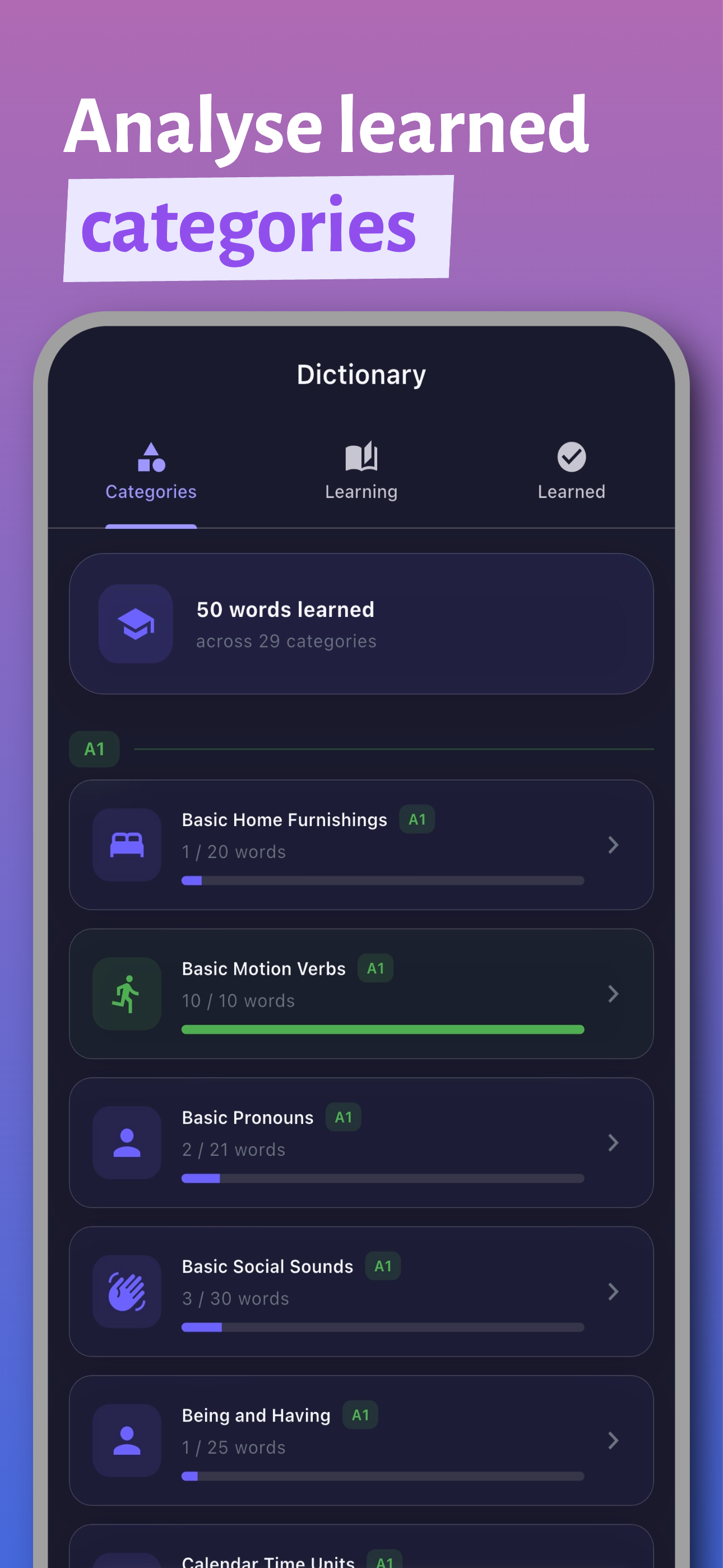
Learn Spanish vocabulary organized by 29 topics
VocaSwipe organizes vocabulary into 29 carefully designed categories so you learn words in meaningful clusters. Combined with spaced repetition, it is the fastest way to build usable vocabulary.
The Science Behind Topic-Based Learning
Cognitive psychologists call it semantic clustering, and the research behind it is robust. When you learn words that share a semantic field (a group of related meanings), each word strengthens the memory of the others. Learning “mesa” (table) alongside “silla” (chair), “plato” (plate), and “cuchillo” (knife) creates a web of associations where recalling any one word primes you to recall the others.
A study published in the Journal of Memory and Language found that words learned in semantic clusters were recalled 40% more accurately than the same words learned in random order. The effect was even stronger during delayed recall tests, suggesting that semantic organization improves not just learning but long-term retention.
This makes intuitive sense. When you walk into a Spanish restaurant, you do not need one random word. You need a whole cluster: menu, waiter, water, bill, recommend, delicious, spicy, vegetarian. If you learned those words together, they activate together. If you learned them scattered across different chapters, you have to hunt for each one individually in your memory.
There is also a practical benefit. Topic-based learning means that after just one study session, you can handle an entire situation. One session on restaurant vocabulary and you can actually order food. One session on directions and you can actually ask your way around. Random word lists never give you that kind of immediate applicability.
Core Categories Every Learner Needs
Not all vocabulary categories are equally important. Here are the eight core topics that provide the highest return on your study time, with the approximate number of words you need in each to reach functional competency.
1. Home and Daily Life (80-100 words)
This is where you live, so it is where most of your thinking happens. Furniture, appliances, rooms, daily routines, cleaning, and household items. Words like cocina (kitchen), cama (bed), ducha (shower), llave (key), and basura (trash). You will use these words every single day, even if only in your head.
2. Food and Drink (100-120 words)
One of the largest and most immediately useful categories. Fruits, vegetables, meats, beverages, cooking methods, and restaurant vocabulary. Essential for travel, socializing, and daily life. Start with the 30 most common food items and expand from there.
3. Body and Health (60-80 words)
Body parts, common symptoms, emotions related to physical states, and basic medical vocabulary. You hope you never need the emergency words, but knowing cabeza (head), estómago (stomach), dolor (pain), and médico (doctor) provides essential peace of mind.
4. Work and Professional Life (70-90 words)
Office vocabulary, job titles, meetings, emails, and professional interactions. Even if you do not work in a Spanish-speaking environment, this category is important for describing what you do and understanding others when they talk about their work.
5. Nature and Weather (50-70 words)
Animals, plants, weather conditions, landscapes, and seasons. Sol (sun), lluvia (rain), playa (beach), montaña (mountain), perro (dog). These come up constantly in small talk and when describing experiences.
6. Emotions and Personality (50-70 words)
Being able to describe how you feel and characterize other people is essential for meaningful conversation. Feliz (happy), triste (sad), enojado (angry), amable (kind), divertido (funny). This category is what moves you from transactional Spanish to expressive Spanish.
7. Shopping and Money (40-60 words)
Prices, sizes, colors, payment methods, and retail interactions. Critical for travel and daily life. Precio (price), tarjeta (card), efectivo (cash), descuento (discount), talla (size).
8. Technology (40-50 words)
Modern life requires modern vocabulary. Teléfono (phone), contraseña (password), pantalla (screen), cargar (to charge), descargar (to download). Many tech words are borrowed from English, which makes this category easier than most.
Word Count Summary: These eight categories total roughly 490-640 words. That is enough to reach a solid A2 level and handle most everyday situations. Compare that to learning 640 random words from an alphabetical list, and the difference in real-world usefulness is enormous.
How Many Words Per Category Do You Need?
The answer depends on your level and your goals. Here is a practical framework based on CEFR level targets:
- A1 (Beginner): 20-30 words per core category. Focus on the most common nouns and verbs. You need enough to handle basic situations: ordering food, describing your home, naming body parts.
- A2 (Elementary): 40-60 words per core category. Expand into adjectives, prepositions, and less common items within each topic. You can now have simple conversations within any category.
- B1 (Intermediate): 80-120 words per core category, plus expansion into specialized categories. You can discuss topics in depth and handle unexpected situations within familiar domains.
- B2 (Upper Intermediate): 150+ words per category with nuanced vocabulary. You know multiple ways to express the same idea and can discuss abstract concepts within each topic.
The beauty of topic-based learning is that you can go deep in categories that matter to you and stay shallow in ones that do not. A food enthusiast might know 200 food words while knowing only 40 technology words. A business professional might have the opposite profile. Both are perfectly valid.
VocaSwipe's 29-Category System
VocaSwipe organizes its entire vocabulary library into 29 topic categories, each designed around a real-world context where you would actually use those words together. The categories cover everything from basic essentials to specialized domains:
The core everyday categories include greetings, family, home, food and drink, body and health, clothing, weather, and time. Travel categories cover transportation, directions, accommodation, and shopping. Professional categories include work, education, and technology. Social categories span emotions, personality, hobbies, sports, and music. And specialized categories address nature, animals, science, arts, and culture.
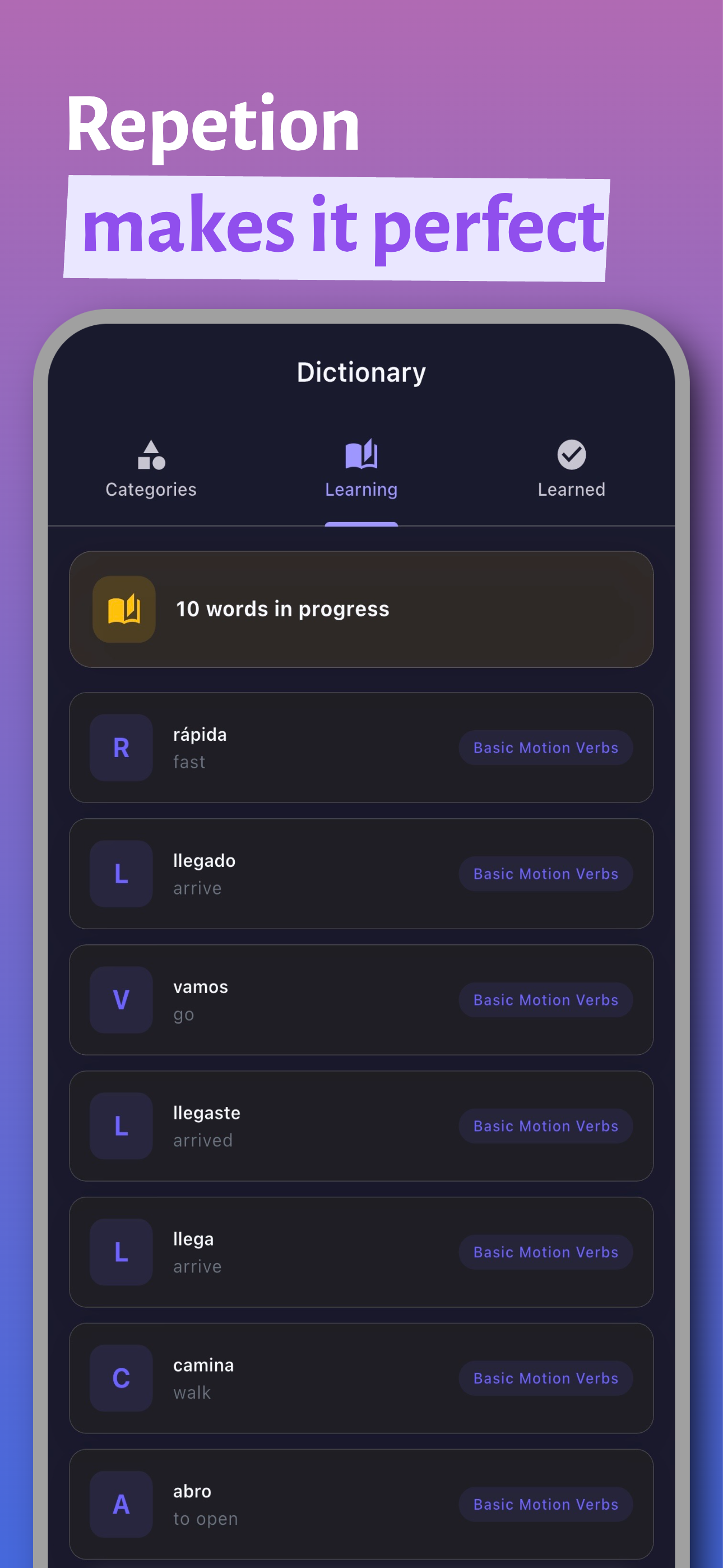
Within each category, words are further organized by frequency and difficulty. When you start a new category, you get the 20-30 most common and useful words first. As you master those, the app introduces progressively less common vocabulary. This means you are always learning the most useful words within each topic before moving to the edges.
The spaced repetition algorithm works across categories. If you study food vocabulary on Monday and body vocabulary on Tuesday, the system tracks each word individually and schedules reviews based on your performance with that specific word, regardless of its category. This means your review sessions are a natural mix of topics, which prevents the monotony of studying one category for too long.
How to Structure Your Topic-Based Study
Here is a practical approach to organizing your vocabulary learning around topics.
Week 1-2: Foundation Categories
Start with greetings, numbers, food, and home. These four categories give you immediate practical vocabulary. Learn 10-15 words per category per week. By the end of two weeks, you will know roughly 80-120 words that you can actually use.
Week 3-4: Expansion Categories
Add body and health, emotions, work, and shopping. Continue reviewing your foundation categories through spaced repetition while introducing new ones. Your total vocabulary is now approaching 200-300 words.
Month 2-3: Personalization
Now that you have the basics, focus on the categories most relevant to your life. If you are learning for travel, prioritize transportation and directions. If you are learning for work, focus on professional vocabulary. Go deeper in your priority categories while maintaining the others through review.
Month 4+: Advanced Expansion
At this stage, you are building nuance within categories you already know and adding specialized categories. You might learn academic vocabulary, legal terms, medical language, or cultural concepts depending on your needs. The semantic framework you built in the first months makes adding new words to existing categories remarkably easy because every new word has existing hooks to attach to.
Follow @vocaswipe on TikTok
Daily Spanish words by category, learning tips, and vocabulary challenges.
Start learning vocabulary the smart way
VocaSwipe's 29 topic categories plus AI-powered spaced repetition give you the most efficient path to Spanish fluency. Pick your first category and start building vocabulary today.
Key Takeaways
- Your brain stores words in semantic networks. Topic-based learning matches this natural architecture for faster acquisition and stronger retention.
- Semantic clustering improves recall by 40%. Learning related words together creates mutual reinforcement.
- Eight core categories cover most daily situations. Home, food, body, work, nature, emotions, shopping, and tech give you a functional foundation.
- Combine topic-based with frequency-based. Within each category, learn the most common words first.
- Personalize after building foundations. Go deep in categories relevant to your goals and life.
- 490-640 topic-organized words reach A2 level. The same number of random words would leave you far less functional.
Frequently Asked Questions
What Spanish topics should I learn first?
Start with the topics you encounter most in daily life: greetings and basic phrases, numbers and time, food and drink, family and people, and home and daily routines. These five categories give you the vocabulary to handle most beginner situations. After that, prioritize based on your goals. If you are learning for travel, add transportation, shopping, and directions. For work, add professional and office vocabulary. Learning the 50-80 most common words in each high-priority category gives you functional coverage of that topic.
How many vocabulary categories are there?
There is no fixed number, but most comprehensive Spanish learning systems organize vocabulary into 20-30 core categories. VocaSwipe uses 29 categories that cover everyday life, from basics like food, home, and body to specialized topics like technology, science, and arts. Within each category, words range from beginner essentials to advanced vocabulary. You do not need to master every category. Focus on the 8-10 most relevant to your life and goals first, then expand as your confidence grows.
Is it better to learn by topic or frequency?
The most effective approach combines both. Start with high-frequency words organized by topic. This gives you the memory benefits of semantic clustering (words in the same category reinforce each other) while ensuring you learn the most useful words first. For example, within the food category, learn “agua” (water) and “pan” (bread) before “alcachofa” (artichoke). Pure frequency lists ignore the memory advantages of topical grouping, and pure topical learning might have you memorizing obscure words before common ones. The hybrid approach gives you the best of both worlds.