When you are starting to learn Spanish, the sheer size of the language can feel overwhelming. Spanish has hundreds of thousands of words. But here is the good news: you do not need most of them. Linguists have shown that a small core of high-frequency words covers a disproportionate amount of everyday conversation.
This list gives you 100 of the most useful Spanish words, organized into eight practical categories. These are not random textbook words. They are the words that native speakers actually use every day, the ones that will get you from zero to your first real conversations fastest.
Each category includes the Spanish word, its English translation, and an example sentence to show you how it works in context. Learning words in context is one of the most effective techniques for vocabulary retention, so pay attention to the example sentences. They will help the words stick.
Learn these 100 words with spaced repetition
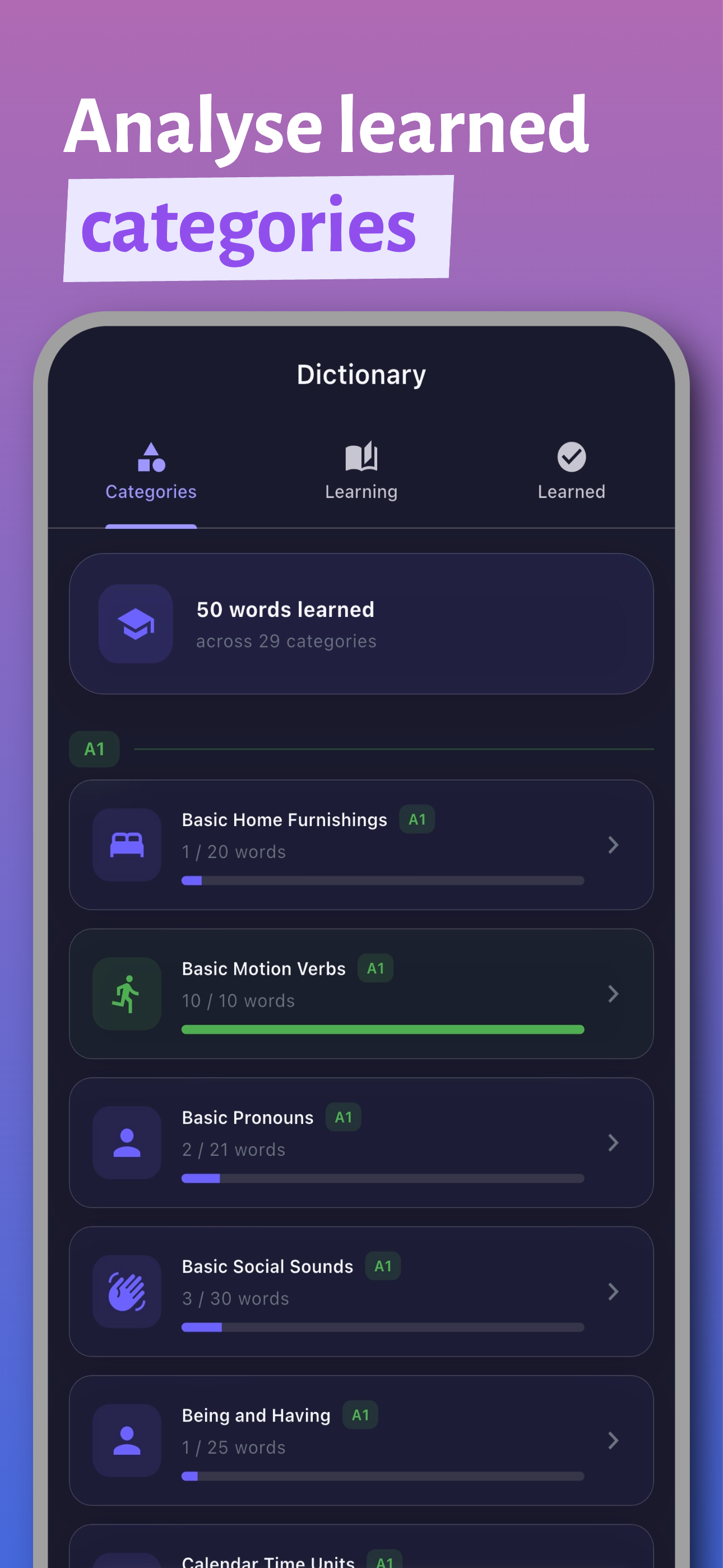
VocaSwipe organizes vocabulary by category and uses AI-powered spaced repetition so you remember every word long-term. Start with these essentials.
Greetings and Polite Expressions (10 Words)
These are the words you will use within your very first minute of speaking Spanish. Master them and you immediately sound like someone who respects the language and culture.
- Hola — Hello. “Hola, me llamo Ana.” (Hello, my name is Ana.)
- Gracias — Thank you. “Muchas gracias por tu ayuda.” (Thank you very much for your help.)
- Por favor — Please. “Un café, por favor.” (A coffee, please.)
- Buenos días — Good morning. “Buenos días, ¿cómo está?” (Good morning, how are you?)
- Buenas noches — Good evening / Good night. “Buenas noches, hasta mañana.” (Good night, see you tomorrow.)
- Perdón — Excuse me / Sorry. “Perdón, ¿dónde está el baño?” (Excuse me, where is the bathroom?)
- Sí — Yes. “Sí, entiendo.” (Yes, I understand.)
- No — No. “No, gracias.” (No, thank you.)
- Adiós — Goodbye. “Adiós, nos vemos pronto.” (Goodbye, see you soon.)
- De nada — You are welcome. “De nada, fue un placer.” (You are welcome, it was a pleasure.)
Memorization tip: Greetings are the easiest category because you can practice them immediately. Say buenos días to yourself every morning and buenas noches every evening. Pair each greeting with the real moment it describes, and they will become automatic within days.
Numbers (10 Words)
You need numbers for prices, addresses, phone numbers, times, and dates. These ten give you the foundation to count, tell time, and handle money.
- Uno — One. “Quiero uno, por favor.” (I want one, please.)
- Dos — Two. “Dos cervezas, por favor.” (Two beers, please.)
- Tres — Three. “Tengo tres hermanos.” (I have three siblings.)
- Cinco — Five. “Son las cinco de la tarde.” (It is five in the afternoon.)
- Diez — Ten. “Cuesta diez euros.” (It costs ten euros.)
- Veinte — Twenty. “Tiene veinte años.” (He/she is twenty years old.)
- Cincuenta — Fifty. “Hay cincuenta personas.” (There are fifty people.)
- Cien — One hundred. “Cien palabras es un buen comienzo.” (One hundred words is a good start.)
- Mil — One thousand. “Cuesta mil pesos.” (It costs a thousand pesos.)
- Primer / Primero — First. “Es mi primer día.” (It is my first day.)
Food and Drink (15 Words)
Food vocabulary is some of the most immediately practical Spanish you can learn. Whether you are at a restaurant, a market, or a friend's kitchen, these words will come up constantly.
- Agua — Water. “Un vaso de agua, por favor.” (A glass of water, please.)
- Café — Coffee. “Me gusta el café con leche.” (I like coffee with milk.)
- Cerveza — Beer. “Una cerveza fría, por favor.” (A cold beer, please.)
- Pan — Bread. “Necesito comprar pan.” (I need to buy bread.)
- Pollo — Chicken. “El pollo está delicioso.” (The chicken is delicious.)
- Arroz — Rice. “Quiero arroz con pollo.” (I want rice with chicken.)
- Leche — Milk. “No tengo leche.” (I do not have milk.)
- Fruta — Fruit. “La fruta está fresca.” (The fruit is fresh.)
- Carne — Meat. “No como carne.” (I do not eat meat.)
- Pescado — Fish. “El pescado es muy bueno aquí.” (The fish is very good here.)
- Comida — Food / Meal. “La comida está lista.” (The food is ready.)
- Desayuno — Breakfast. “El desayuno es a las ocho.” (Breakfast is at eight.)
- Cena — Dinner. “¿Qué quieres para la cena?” (What do you want for dinner?)
- Azúcar — Sugar. “Sin azúcar, por favor.” (Without sugar, please.)
- Cuenta — Bill / Check. “La cuenta, por favor.” (The bill, please.)
Memorization tip: Label items in your kitchen with sticky notes in Spanish for a week. Every time you reach for the coffee, you will see café. This physical association is surprisingly powerful and mirrors how children learn their first language.
Travel and Directions (15 Words)
Getting around in a Spanish-speaking country requires a specific set of vocabulary. These 15 words will help you navigate cities, ask for help, and find your way. If you are planning a trip, pair this list with our complete vocabulary learning guide for maximum retention.
- Dónde — Where. “¿Dónde está la estación?” (Where is the station?)
- Calle — Street. “Vivo en la calle principal.” (I live on the main street.)
- Izquierda — Left. “Gira a la izquierda.” (Turn left.)
- Derecha — Right. “Está a la derecha.” (It is on the right.)
- Cerca — Near. “¿Hay un banco cerca?” (Is there a bank nearby?)
- Lejos — Far. “No está lejos de aquí.” (It is not far from here.)
- Hotel — Hotel. “Busco un hotel barato.” (I am looking for a cheap hotel.)
- Aeropuerto — Airport. “¿Cómo llego al aeropuerto?” (How do I get to the airport?)
- Estación — Station. “La estación de tren está cerca.” (The train station is nearby.)
- Taxi — Taxi. “Necesito un taxi.” (I need a taxi.)
- Mapa — Map. “¿Tiene un mapa de la ciudad?” (Do you have a map of the city?)
- Tienda — Store / Shop. “La tienda cierra a las nueve.” (The store closes at nine.)
- Banco — Bank. “Necesito ir al banco.” (I need to go to the bank.)
- Hospital — Hospital. “¿Dónde está el hospital más cercano?” (Where is the nearest hospital?)
- Billete — Ticket. “Un billete de ida, por favor.” (A one-way ticket, please.)
Family and People (10 Words)
Talking about the people in your life is one of the first things you do when getting to know someone in any language. These words come up in almost every introductory conversation.
- Madre / Mamá — Mother / Mom. “Mi madre vive en Madrid.” (My mother lives in Madrid.)
- Padre / Papá — Father / Dad. “Mi padre cocina muy bien.” (My father cooks very well.)
- Hermano / Hermana — Brother / Sister. “Tengo una hermana mayor.” (I have an older sister.)
- Hijo / Hija — Son / Daughter. “Su hija tiene cinco años.” (Her daughter is five years old.)
- Amigo / Amiga — Friend. “Es mi mejor amigo.” (He is my best friend.)
- Hombre — Man. “El hombre lee un libro.” (The man reads a book.)
- Mujer — Woman. “La mujer habla tres idiomas.” (The woman speaks three languages.)
- Niño / Niña — Boy / Girl. “Los niños juegan en el parque.” (The children play in the park.)
- Persona — Person. “Es una buena persona.” (He/she is a good person.)
- Nombre — Name. “¿Cuál es tu nombre?” (What is your name?)
Follow @vocaswipe on TikTok
Daily Spanish words, pronunciation tips, and vocabulary challenges.
Emotions and Descriptions (15 Words)
Once you move beyond basic survival vocabulary, describing how you feel and what things are like is the next step toward real conversation. These adjectives and emotion words add color to everything you say.
- Bueno / Buena — Good. “La comida está muy buena.” (The food is very good.)
- Malo / Mala — Bad. “No es una mala idea.” (It is not a bad idea.)
- Grande — Big / Large. “Es una ciudad muy grande.” (It is a very big city.)
- Pequeño / Pequeña — Small. “Vivo en un pueblo pequeño.” (I live in a small town.)
- Feliz — Happy. “Estoy muy feliz hoy.” (I am very happy today.)
- Triste — Sad. “La película es muy triste.” (The movie is very sad.)
- Cansado / Cansada — Tired. “Estoy cansado después del trabajo.” (I am tired after work.)
- Bonito / Bonita — Beautiful / Pretty. “Qué bonita es esta playa.” (How beautiful this beach is.)
- Fácil — Easy. “El español no es tan fácil.” (Spanish is not that easy.)
- Difícil — Difficult. “Es difícil pero no imposible.” (It is difficult but not impossible.)
- Nuevo / Nueva — New. “Tengo un teléfono nuevo.” (I have a new phone.)
- Viejo / Vieja — Old. “Es un edificio muy viejo.” (It is a very old building.)
- Rápido / Rápida — Fast. “El tren es muy rápido.” (The train is very fast.)
- Importante — Important. “Es importante practicar cada día.” (It is important to practice every day.)
- Contento / Contenta — Content / Pleased. “Estoy contento con mi progreso.” (I am pleased with my progress.)
Memorization tip: For adjectives, learn them in opposite pairs. Bueno/malo, grande/pequeño, fácil/difícil. Your brain remembers contrasts much better than isolated items. When you recall one, the other comes along for free.
Daily Actions (15 Words)
Verbs are the engine of any sentence. These 15 action words cover the most common things people do every day. Learn them and you can describe most of your daily routine in Spanish. For a deeper dive into verbs, see our guide on using spaced repetition to master Spanish vocabulary.
- Ser — To be (permanent). “Soy estudiante.” (I am a student.)
- Tener — To have. “Tengo dos gatos.” (I have two cats.)
- Ir — To go. “Voy al supermercado.” (I am going to the supermarket.)
- Querer — To want. “Quiero aprender español.” (I want to learn Spanish.)
- Poder — To be able to / Can. “¿Puedo sentarme aquí?” (Can I sit here?)
- Hacer — To do / To make. “¿Qué haces?” (What are you doing?)
- Hablar — To speak. “Hablo un poco de español.” (I speak a little Spanish.)
- Comer — To eat. “Vamos a comer.” (Let us eat.)
- Beber — To drink. “¿Qué quieres beber?” (What do you want to drink?)
- Dormir — To sleep. “Necesito dormir más.” (I need to sleep more.)
- Trabajar — To work. “Trabajo desde casa.” (I work from home.)
- Vivir — To live. “Vivo en Barcelona.” (I live in Barcelona.)
- Comprar — To buy. “Quiero comprar un regalo.” (I want to buy a gift.)
- Necesitar — To need. “Necesito ayuda.” (I need help.)
- Entender — To understand. “No entiendo la pregunta.” (I do not understand the question.)
Time and Calendar (10 Words)
Time-related vocabulary is essential for making plans, scheduling meetings, and understanding when things happen. These words will help you navigate daily scheduling in Spanish.
- Hoy — Today. “Hoy es un buen día.” (Today is a good day.)
- Mañana — Tomorrow / Morning. “Mañana tengo una reunión.” (Tomorrow I have a meeting.)
- Ayer — Yesterday. “Ayer fue un día largo.” (Yesterday was a long day.)
- Ahora — Now. “Lo necesito ahora.” (I need it now.)
- Siempre — Always. “Siempre desayuno a las ocho.” (I always have breakfast at eight.)
- Nunca — Never. “Nunca es tarde para aprender.” (It is never too late to learn.)
- Hora — Hour / Time. “¿Qué hora es?” (What time is it?)
- Día — Day. “Cada día aprendo algo nuevo.” (Every day I learn something new.)
- Semana — Week. “La próxima semana viajo a México.” (Next week I am traveling to Mexico.)
- Año — Year. “Este año quiero hablar español.” (This year I want to speak Spanish.)
Memorization tip: For time words, change your phone language to Spanish or set Spanish labels on your calendar app. Seeing lunes, martes, miercoles every day when you check your schedule creates passive repetition that reinforces these words without any extra study time.
What to Do After Learning These 100 Words
One hundred words is a powerful start, but it is just the beginning. Once you have these down, here is how to keep building momentum:
Expand to 500 words. Research shows that 500 words gets you to CEFR A1 level, where you can handle basic tourist situations and introduce yourself comfortably. Focus on adding more words within the categories you already know, plus new categories like weather, clothing, and work.
Use spaced repetition. The biggest mistake beginners make is learning words once and never reviewing them systematically. Without spaced repetition, you will forget most of what you learn within a week. An app like VocaSwipe schedules reviews automatically so each word is reinforced at the optimal moment before you would forget it.
Start combining words into sentences. You do not need to study grammar formally at this stage. Just start putting words together. Quiero agua (I want water), Dónde está el hotel (Where is the hotel), La comida está buena (The food is good). Even simple two and three-word combinations build your confidence and train your brain to think in Spanish.
Stay motivated with measurable goals. Tracking your word count and maintaining your learning streak are two of the strongest predictors of long-term success. Set a target: 500 words by month two, 1,000 by month four. When you can see your progress on a chart, the motivation takes care of itself.
Master these words with smart flashcards
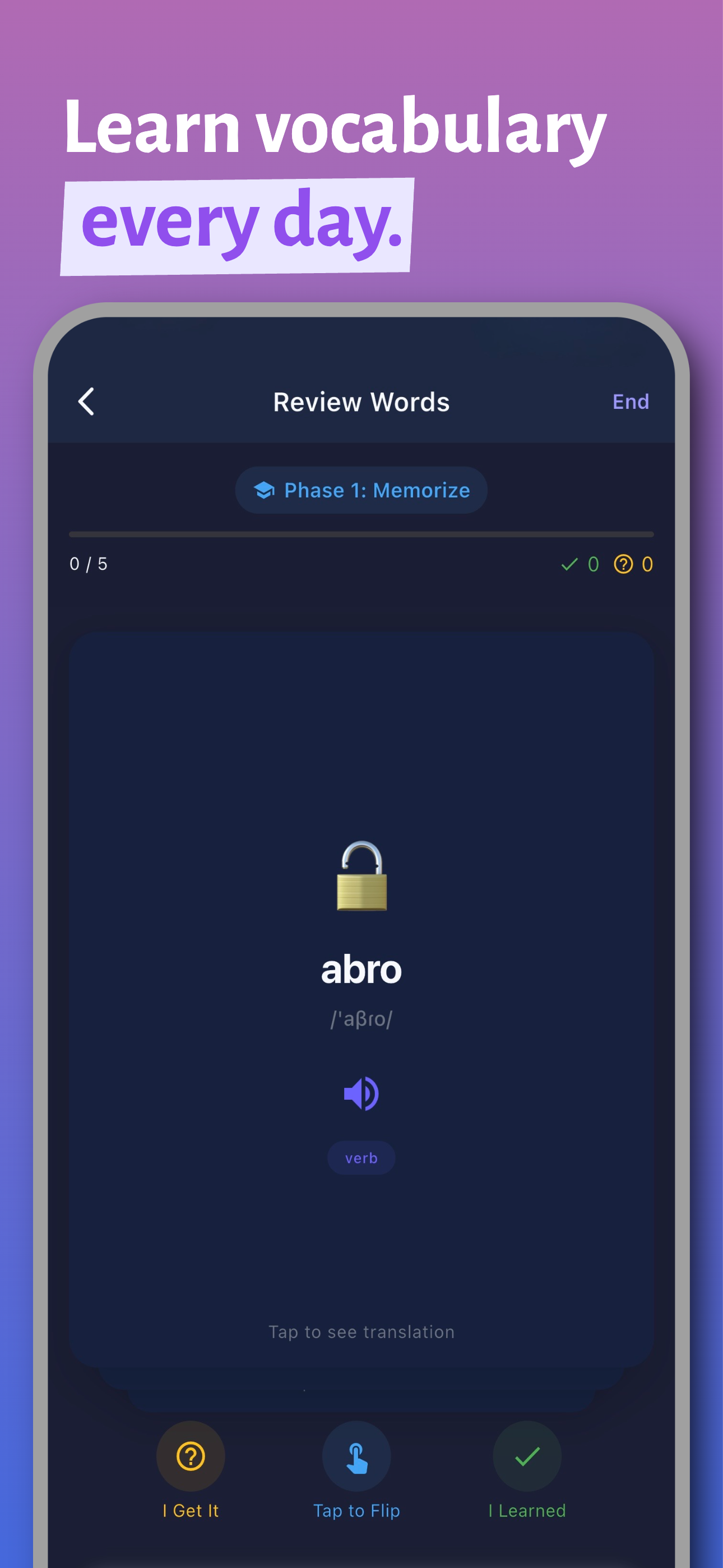
VocaSwipe organizes vocabulary by category and adapts to your learning pace. Start with these 100 essential words and watch your Spanish grow.
Key Takeaways
- 100 words covers a lot of ground. These high-frequency words appear in roughly 50% of everyday Spanish conversation.
- Learn by category, not alphabetically. Your brain stores words in semantic clusters, so organized lists are far more effective.
- Example sentences are essential. Words learned in context are retained 2-3 times longer than isolated vocabulary.
- Use opposite pairs for adjectives. Bueno/malo, grande/pequeño. Contrasts strengthen memory for both words.
- Review with spaced repetition. Learning these words once is not enough. Systematic review is what makes them permanent.
- Your next goal is 500 words. That gets you to A1 level and real-world conversational ability in basic situations.
Frequently Asked Questions
What are the most important Spanish words to learn first?
The most important Spanish words to learn first are high-frequency words for everyday situations: greetings like hola and gracias, basic verbs like ser, tener, and querer, question words like dónde and cuánto, and survival vocabulary for food, directions, and numbers. Research shows that just 100 carefully chosen words can cover roughly 50% of everyday spoken Spanish, so focusing on the most common words first gives you the biggest return on your study time.
How many words does a Spanish beginner need?
A Spanish beginner at the A1 CEFR level needs approximately 500 words to handle basic interactions like greeting people, ordering food, and introducing themselves. To reach A2 (elementary) level and manage routine conversations, you need around 1,000 words. Most language experts recommend starting with the 100 most frequent words, then expanding to 500 within your first two months of study. With consistent daily practice using spaced repetition, this is very achievable.
Should I learn Spanish words or phrases?
The most effective approach is to learn both, but start with individual words organized by category and then quickly move to learning them in short phrases and sentences. Individual words build your foundation and are easier to combine flexibly. Phrases teach you natural word order and grammar patterns without formal grammar study. For example, learning quiero (I want) as a word is useful, but learning quiero agua (I want water) teaches you a pattern you can reuse with dozens of other nouns. Aim for a mix of about 70% words and 30% phrases in the beginning stages.