The debate between language learning apps and traditional classes has been running for over a decade now, and in 2026 it is more relevant than ever. Apps have become dramatically more sophisticated. Classrooms have adapted with hybrid models. And learners are spending real money on both, often without knowing which one actually delivers better results for their specific goals.
Here is the honest answer: neither is universally better. Each excels at different aspects of language acquisition, and the smartest learners are combining both in ways that would have been impractical just a few years ago. But the details matter, because choosing the wrong approach for the wrong skill can waste months of effort and hundreds of dollars.
This article breaks down exactly where apps win, where classes win, what the real costs look like, and how to build a hybrid approach that gives you the benefits of both without the drawbacks of either.
Build your vocabulary foundation with VocaSwipe
AI-powered spaced repetition for Spanish vocabulary. The perfect app component for your hybrid learning strategy.
Where Language Learning Apps Win
Apps have clear, measurable advantages in several areas. These are not opinions. They are backed by research on memory, habit formation, and learning efficiency.
Vocabulary Acquisition and Retention
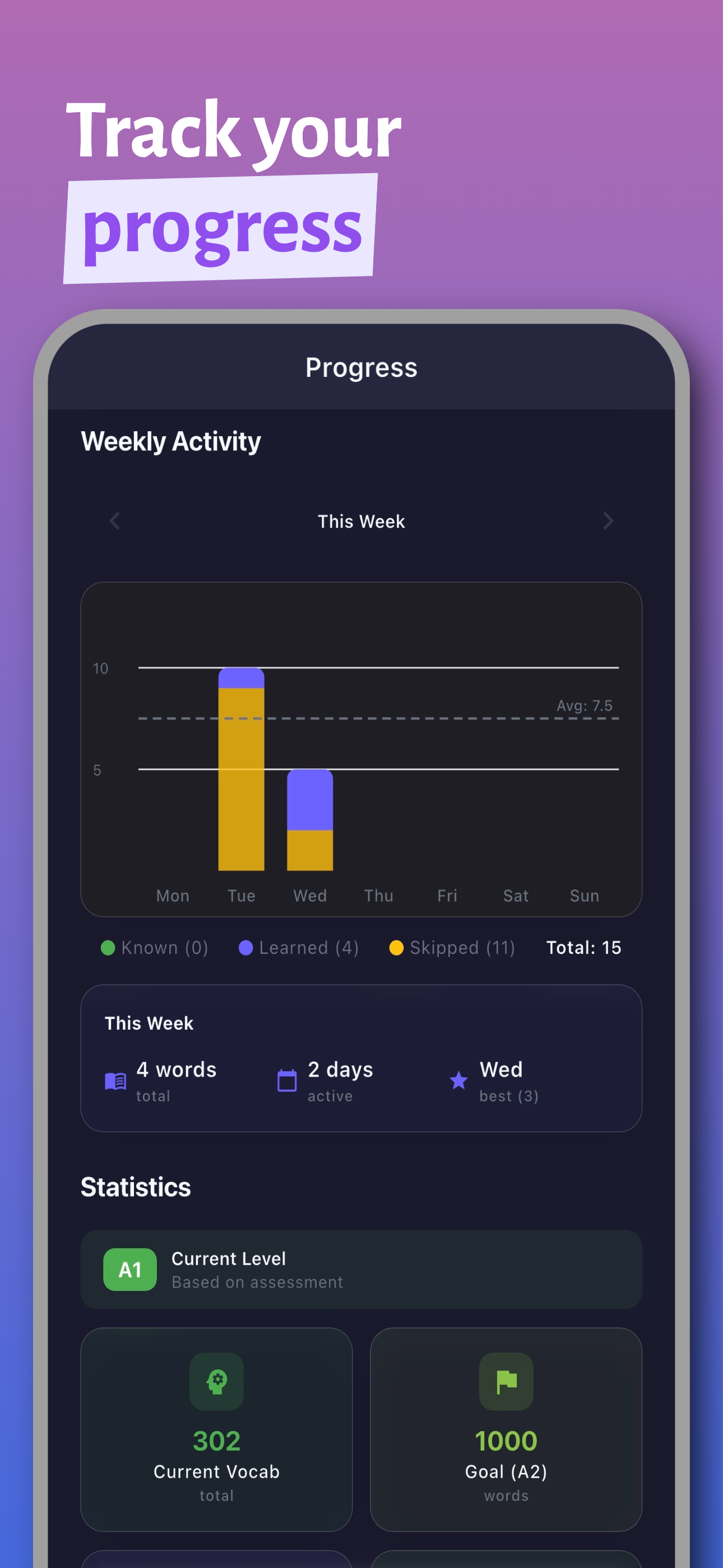
This is where apps dominate, and it is not close. Modern vocabulary apps use spaced repetition algorithms that schedule each word review at the scientifically optimal moment, right before your brain would forget it. A human teacher simply cannot track hundreds of individual words across dozens of students and know which ones each person needs to review today.
Research published in Psychological Bulletin confirms that spaced repetition produces a 200% improvement in long-term retention compared to the massed practice typical of classroom vocabulary drills. When it comes to building and keeping a large vocabulary, apps are the clear winner.
Daily Consistency and Habit Formation
Language classes happen two or three times a week at best. Apps are available every single day, in your pocket, requiring as little as five minutes. This matters because memory consolidation happens during sleep, and daily exposure triggers seven consolidation cycles per week compared to two or three with a class schedule.
Behavioral research on habit formation shows that daily micro-sessions of five to ten minutes create stronger learning habits than longer weekly sessions. The friction is lower, the streak mechanics keep you engaged, and the compound effect over months is substantial.
Cost Efficiency
The cost difference between apps and classes is dramatic. Most language apps cost between zero and fifteen dollars per month. A private tutor charges thirty to eighty dollars per hour. Even budget-friendly options like community college classes or online group sessions run hundreds of dollars per month.
For vocabulary specifically, the cost-per-word-learned with an app is a fraction of a cent. With a tutor, you might spend an entire sixty-dollar hour on material you could have covered in ten minutes of app-based spaced repetition. That does not mean the tutor is wasted time, but it does mean that using tutoring hours for vocabulary drilling is an expensive misallocation.
Flexibility and Accessibility
Apps work on your schedule. Waiting for coffee, commuting on the train, lying in bed before sleep. There is no scheduling conflict, no commute to a classroom, no missed sessions because of a work meeting. For busy adults, this flexibility is often the difference between learning consistently and not learning at all.
Where Traditional Classes Win
Classes have their own set of advantages that apps have not been able to fully replicate, even with advances in AI and natural language processing.
Speaking Practice and Pronunciation
This is the biggest gap in app-based learning. Speaking a language requires real-time production: forming sentences under time pressure, negotiating meaning, and adjusting based on your conversation partner's reactions. No app in 2026 fully replicates the cognitive demands of a real conversation with a human being.
A skilled teacher can hear your pronunciation errors, identify patterns (like consistently struggling with the Spanish rolled R or the distinction between ser and estar), and provide targeted correction. While some apps offer speech recognition, the feedback is still less nuanced than what a trained human ear can provide.
Accountability and Structure
Apps rely entirely on self-motivation. Classes provide external accountability: a scheduled time, a teacher who notices when you are absent, classmates who expect you to show up, and assignments with deadlines. For learners who struggle with consistency, this external structure can be the difference between making progress and abandoning the effort after a few weeks.
Research on language learning motivation consistently shows that social accountability is one of the strongest predictors of long-term persistence. The dropout rate for self-study apps is significantly higher than for structured class programs.
Cultural Nuance and Error Correction
Language is more than vocabulary and grammar. It includes register (formal vs. informal), cultural context, idiomatic expressions, and the subtle social rules that govern communication. A good teacher, especially a native speaker, conveys these nuances naturally through conversation and can explain why a technically correct sentence might sound strange or inappropriate in certain contexts.
Error correction in class is also immediate and contextual. When you make a grammatical mistake in conversation, a teacher corrects it on the spot while the context is fresh. An app can only correct errors in the specific exercises it provides, which is a much narrower range of potential mistakes.
The Real Cost Breakdown: Apps vs Classes in 2026
Let us look at the actual numbers. These are based on average prices across major markets in 2026:
Language Learning Apps (monthly cost):
- Free tier apps (VocaSwipe, basic Duolingo): $0/month
- Premium app subscriptions: $7 to $15/month
- Annual cost range: $0 to $180/year
Traditional Classes and Tutoring (monthly cost):
- Private tutor (in-person): $30 to $80/hour, 4 sessions = $120 to $320/month
- Online tutor (iTalki, Preply): $15 to $25/hour, 4 sessions = $60 to $100/month
- Group classes (language school): $200 to $500/month
- University course: $1,000 to $3,000/semester
- Annual cost range: $720 to $6,000+/year
The cost gap is significant. A year of app-based learning can cost less than a single month of private tutoring. But cost alone does not tell the full story. The question is what you get for that money, and whether the cheaper option actually delivers results.
The answer depends heavily on what skill you are trying to develop. For vocabulary, the app is not just cheaper, it is genuinely more effective per dollar spent. For conversational fluency, the tutor provides something the app cannot. This is why the hybrid approach makes so much sense.
The Hybrid Approach: Getting the Best of Both
The most effective language learners in 2026 are not choosing between apps and classes. They are using both strategically, allocating each tool to what it does best. Here is a practical framework:
Use Apps Daily for Vocabulary and Input
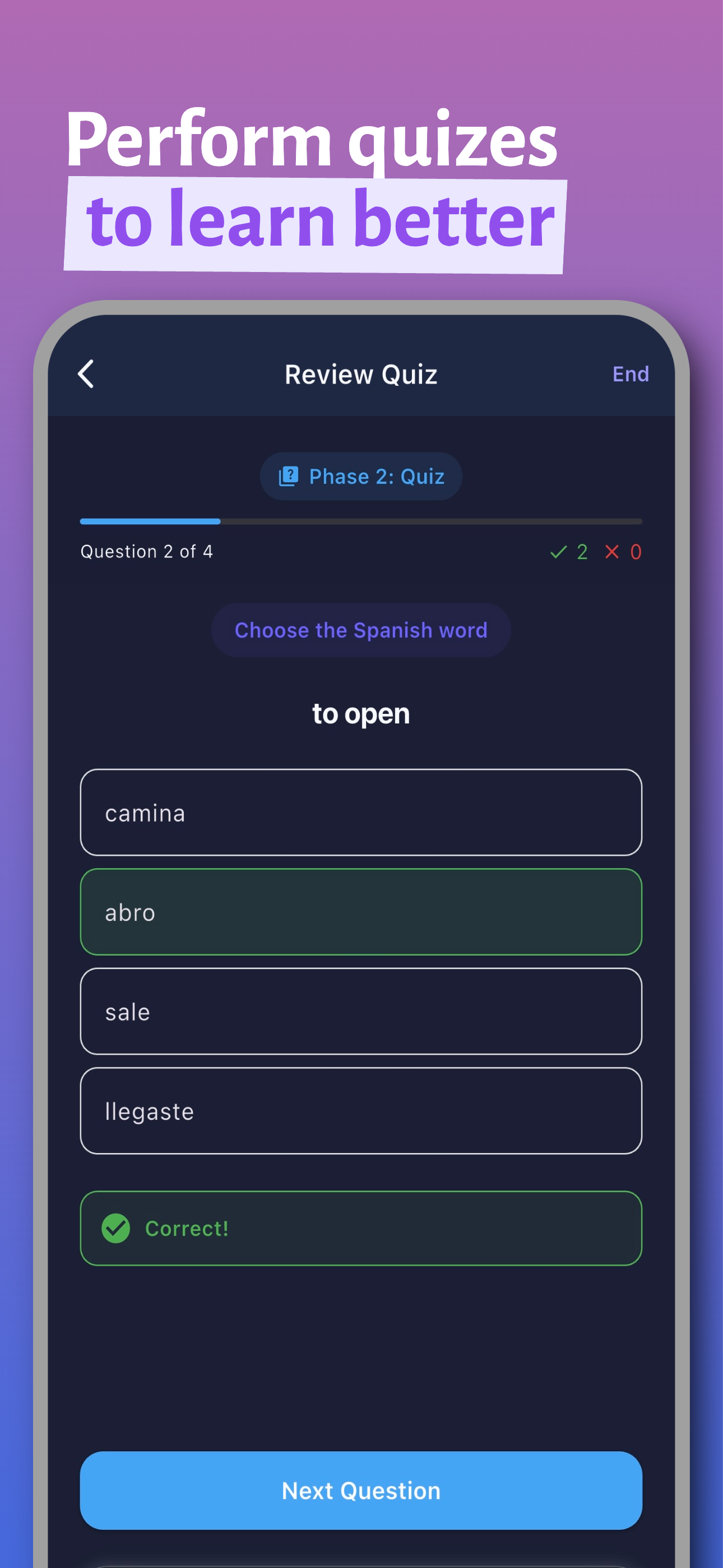
Spend five to ten minutes every day on vocabulary acquisition using an app with spaced repetition flashcards. This builds your word bank efficiently and ensures you are making progress every single day. VocaSwipe handles this automatically, scheduling reviews based on your individual memory patterns and gradually expanding your Spanish vocabulary.
Supplement with listening practice through podcasts, YouTube, or app-based audio content. The goal is daily input: words going into your brain through reading and listening, reinforced by spaced repetition.
Use Classes Weekly for Speaking and Feedback
Schedule one to two conversation sessions per week with a tutor or in a group class. Use this time exclusively for speaking practice, cultural questions, and getting feedback on your output. Do not waste expensive tutoring time on vocabulary drilling or grammar explanations that an app or textbook can handle for free.
Come to each session prepared with the vocabulary you learned that week through your app. Try to use new words in conversation. Ask your tutor to correct your pronunciation and suggest more natural ways to express your ideas. This is where the real value of human instruction lies.
The Optimal Split
For most learners, the ideal balance looks something like this: seventy percent of your total study time on apps and self-study (vocabulary, reading, listening) and thirty percent on human interaction (tutoring, conversation partners, group classes). This gives you the daily consistency and efficient vocabulary building of apps, plus the speaking practice and accountability of classes.
At the beginner stage (A1-A2), you might lean more heavily toward apps, since building a foundational vocabulary is the priority. As you advance to intermediate and upper-intermediate levels (B1-B2), shift more time toward conversation practice, since your vocabulary foundation is solid and speaking fluency becomes the bottleneck.
What the Research Actually Says
A 2023 meta-analysis published in Computer Assisted Language Learning examined 45 studies comparing app-based and classroom-based language instruction. The findings were nuanced: apps produced significantly better outcomes for vocabulary retention and reading comprehension, while classroom instruction produced better outcomes for speaking fluency and pragmatic competence.
Neither approach was found to be universally superior. The studies that showed the largest overall learning gains were those where learners used a combination of digital tools and human instruction. This aligns with what most experienced language teachers have been saying for years: technology is a powerful complement to human teaching, not a replacement for it.
A separate study in the Journal of Educational Technology & Society found that learners who used AI-powered language apps for vocabulary alongside weekly tutoring sessions progressed 40% faster than those using either approach alone. The combination was more effective than doubling the time spent on either method individually.
Follow @vocaswipe on TikTok
Daily Spanish words, pronunciation tips, and vocabulary challenges.
Making Your Decision: A Practical Framework
Choose apps as your primary tool if: you are on a tight budget, you need scheduling flexibility, your main goal is building vocabulary and reading comprehension, you are self-disciplined enough to study daily without external accountability, or you are a beginner focused on building a foundation before speaking.
Choose classes as your primary tool if: you can afford regular tutoring sessions, your main goal is conversational fluency, you need external accountability to stay consistent, you are at an intermediate level and need speaking practice, or you learn best through social interaction.
Choose the hybrid approach if: you want the fastest possible progress, you can dedicate five to ten minutes daily to an app plus one to two hours weekly to a class, you want both strong vocabulary and speaking ability, or you are serious about reaching B2 or above.
Start the app side of your hybrid strategy
VocaSwipe gives you AI-powered spaced repetition for Spanish vocabulary. Pair it with weekly conversation practice for the fastest path to fluency.
Key Takeaways
- Apps excel at vocabulary and consistency. Spaced repetition algorithms outperform classroom vocabulary drills for long-term retention.
- Classes excel at speaking and accountability. Real conversation practice with error correction is something apps still cannot fully replicate.
- The cost gap is massive. Apps cost $0 to $180 per year versus $720 to $6,000+ for classes.
- The hybrid approach works best. Daily app use for vocabulary plus weekly classes for conversation produces 40% faster progress than either alone.
- Match the tool to the skill. Do not waste tutoring hours on vocabulary drilling. Do not expect an app to make you a fluent speaker on its own.
- Adjust the ratio as you advance. More app time at beginner level, more conversation time at intermediate and above.
Frequently Asked Questions
Are language learning apps as good as classes?
It depends on the skill. Apps are superior for vocabulary acquisition and daily consistency, thanks to spaced repetition algorithms that optimize review timing for each individual word. Classes are better for speaking practice, pronunciation correction, and cultural nuance. Research shows that the most effective approach combines both: apps for daily vocabulary building and classes for weekly conversation practice. Learners using this hybrid method progress roughly 40% faster than those using either approach alone.
How much do Spanish classes cost vs apps?
Private Spanish tutors typically charge $30 to $80 per hour, while online tutors on platforms like iTalki average $15 to $25 per hour. Group classes at language schools range from $200 to $500 per month. In contrast, most language learning apps cost $0 to $15 per month, with many offering robust free tiers. Over a year, apps cost roughly $0 to $180 compared to $720 to $6,000 or more for regular classes. The key is to allocate your budget strategically: use free or low-cost apps for vocabulary and invest in tutoring specifically for conversation practice.
Can I become fluent using only apps?
You can build strong vocabulary and reading comprehension using apps alone, potentially reaching B1 or B2 level in receptive skills. However, full conversational fluency requires speaking practice with real people. Apps excel at the input side of language learning: vocabulary, grammar patterns, reading, and listening. For speaking and writing output, you will eventually need human interaction through language exchange partners, tutoring, or immersion. Many successful learners use apps to build their vocabulary foundation first, then add conversation practice once they reach an intermediate level.