There has never been more ways to learn Spanish than right now. Apps, tutors, classes, podcasts, TV shows, textbooks, AI chatbots, language exchanges, the options are overwhelming. The question is not whether you can learn Spanish. It is which methods are actually worth your time and money.
The answer, based on research and the experience of thousands of successful learners, is that no single method does everything. The best strategy combines two to three complementary approaches that cover vocabulary building, speaking practice, and authentic listening exposure.
This guide ranks the eight most popular methods by effectiveness, cost, and convenience. Each has genuine strengths and real limitations. The goal is to help you build a personalized learning stack that fits your schedule, budget, and goals.
Build your vocabulary foundation
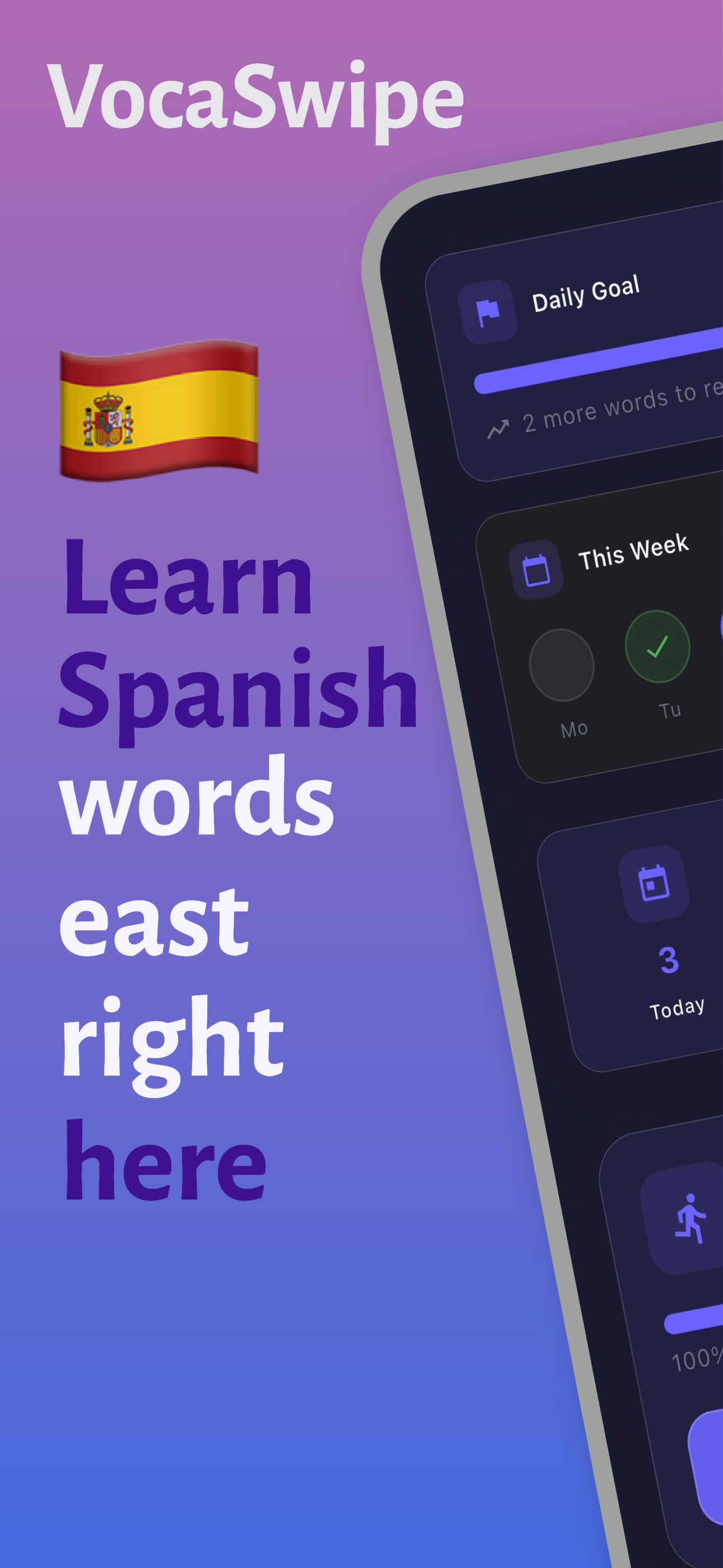
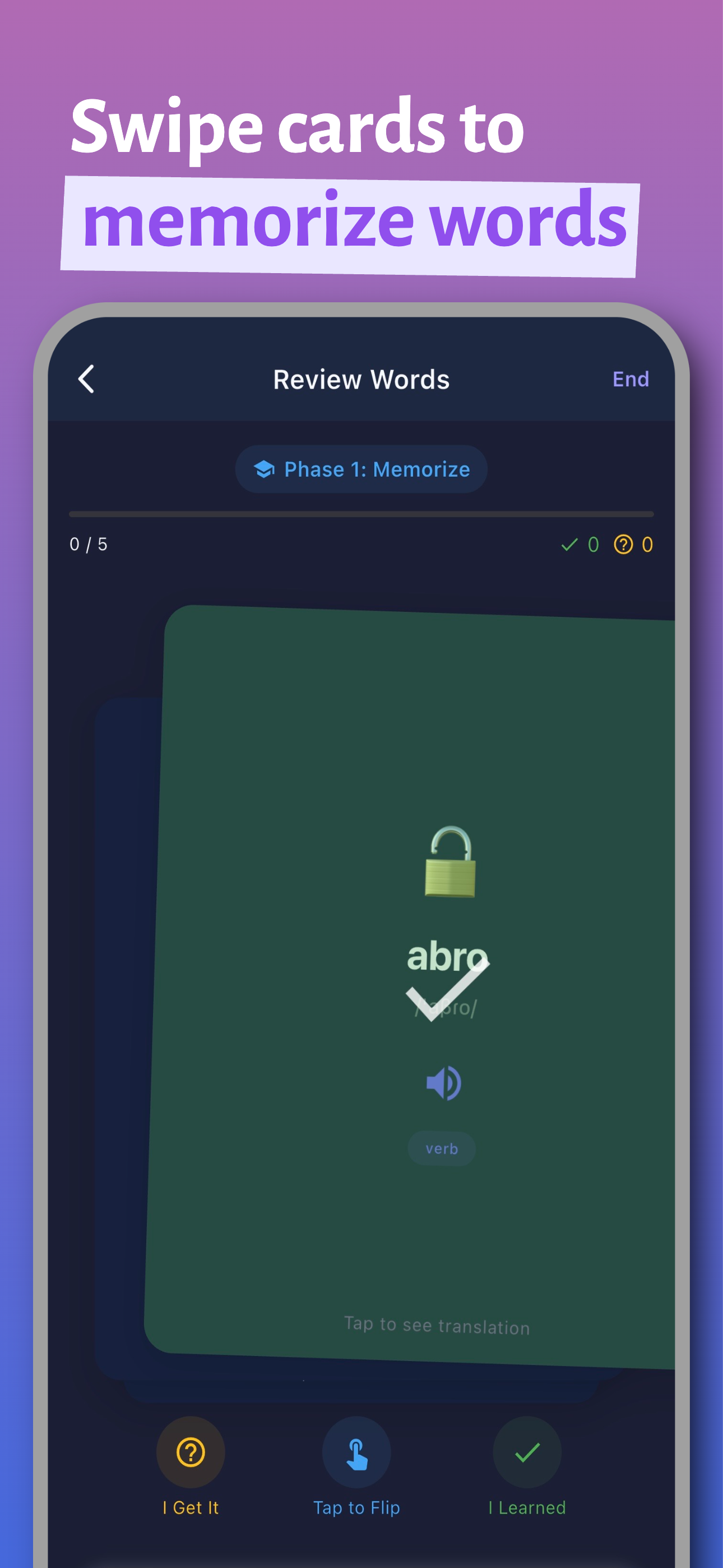
VocaSwipe uses AI-powered spaced repetition to help you memorize Spanish words 3x faster. The perfect daily base for any learning method stack.
1. Full Immersion
Effectiveness: Highest. Cost: High (relocation). Convenience: Low.
Living in a Spanish-speaking country remains the gold standard for language acquisition. When every interaction, from buying coffee to reading street signs to overhearing conversations, happens in Spanish, your brain is forced to process the language continuously. You get thousands of hours of input that no classroom or app can replicate.
The FSI achieves its 600-750 hour benchmarks through intensive immersion programs. Studies on study-abroad students consistently show faster gains in listening comprehension, speaking fluency, and cultural understanding compared to home-country learners.
Best for: Learners who can relocate or take extended trips. Limitation: Not accessible to most people. Even during immersion, structured vocabulary study accelerates progress significantly.
2. One-on-One Tutoring
Effectiveness: Very high. Cost: $10-50/hour. Convenience: Moderate (online options available).
A good tutor adapts to your level in real time, corrects your mistakes, answers your specific questions, and provides the kind of interactive practice that builds speaking confidence. Online platforms have made tutoring far more accessible and affordable than it was even five years ago, with qualified native speakers available for as little as $10 per hour.
The main advantage of tutoring over self-study is accountability and feedback. A tutor catches errors you would never notice on your own and pushes you to produce language actively rather than passively consuming it.
Best for: Speaking practice and personalized feedback. Limitation: Expensive for daily use. Most effective when combined with independent vocabulary study between sessions.
3. Vocabulary Apps with Spaced Repetition
Effectiveness: High (for vocabulary). Cost: Free to $10/month. Convenience: Very high.
Spaced repetition is the most efficient method for memorizing vocabulary, and vocabulary is the foundation of language ability. Apps that implement SRS algorithms schedule your reviews at scientifically optimal intervals, producing 200% better long-term retention compared to traditional study methods.
The convenience factor is massive. Five minutes on your phone during a commute, lunch break, or before bed is enough for meaningful daily progress. You can learn 10-15 new words per day while reviewing dozens of previously learned words, all in a single short session.
Best for: Daily vocabulary building and long-term retention. Limitation: Does not develop speaking or advanced listening skills on its own. Best used as the foundation of a multi-method approach.
4. Group Classes
Effectiveness: Moderate to high. Cost: $15-40/hour. Convenience: Low to moderate.
Traditional group classes provide structure, social motivation, and a trained instructor. They are especially good for beginners who benefit from a guided curriculum and the accountability of showing up at a fixed time. The social element, learning alongside others at a similar level, adds motivation that solo study lacks.
The downside is efficiency. In a class of 10 students, you get roughly one-tenth of the speaking time compared to a private tutor. The pace is set by the group, which means you may be bored during topics you already know and rushed through topics you need more time with.
Best for: Beginners who want structure and social learning. Limitation: Less individual attention, fixed schedules, and relatively high cost per hour of actual practice.
5. TV Shows and Movies with Subtitles
Effectiveness: Moderate. Cost: Free to $15/month (streaming). Convenience: High.
Watching Spanish-language content is one of the most enjoyable ways to improve your listening skills and absorb natural speech patterns. Shows like La Casa de Papel, Elite, and Club de Cuervos expose you to real accents, slang, and conversational rhythm that textbooks cannot teach.
The key is subtitle strategy. Start with Spanish audio and English subtitles to train your ear. Progress to Spanish audio with Spanish subtitles to connect sounds with written words. Eventually, remove subtitles entirely. Each stage builds a different skill.
Best for: Listening comprehension, cultural knowledge, and maintaining motivation. Limitation: Passive activity. It builds comprehension but does not develop production skills unless you actively shadow (repeat what you hear).
6. Podcasts
Effectiveness: Moderate. Cost: Free. Convenience: Very high.
Spanish learning podcasts fill dead time, commutes, workouts, household chores, with useful input. Beginner podcasts like SpanishPod101 and Coffee Break Spanish teach structured lessons. Intermediate and advanced learners can switch to native content on topics they enjoy.
Podcasts excel at building listening stamina. Unlike short app sessions, a 30-minute podcast trains your brain to sustain attention in Spanish over extended periods, which is exactly what real conversations demand.
Best for: Listening skills and filling otherwise unused time. Limitation: No visual context, no interaction, and no feedback on your understanding.
Follow @vocaswipe on TikTok
Quick Spanish lessons, method comparisons, and vocabulary challenges.
7. Textbooks
Effectiveness: Moderate (for grammar). Cost: $20-50 one-time. Convenience: Moderate.
Textbooks remain the best resource for systematic grammar instruction. A well-structured textbook like Practice Makes Perfect or Madrigal's Magic Key to Spanish explains grammar rules clearly, provides exercises, and builds knowledge in a logical sequence. No app or tutor organizes grammar as comprehensively.
The limitation is engagement. Textbooks are not fun. They require self-discipline, and without a way to practice what you learn, the knowledge stays theoretical. They also cannot adapt to your individual pace or weaknesses the way adaptive software can.
Best for: Understanding grammar rules and sentence structure. Limitation: Passive, not engaging, and does not build speaking or listening skills.
8. Language Exchange
Effectiveness: Moderate to high. Cost: Free. Convenience: Moderate.
Language exchange partners (you teach them English, they teach you Spanish) provide free conversation practice with native speakers. Platforms like Tandem and HelloTalk make it easy to find partners. The exchange format creates a natural, low-pressure environment because both sides are learning.
The challenge is consistency and quality. Many exchanges fizzle out after a few sessions. The conversation tends to default to the stronger language (usually English), and without structure, sessions can feel unfocused. Finding a committed, compatible partner takes trial and error.
Best for: Free speaking practice and cultural exchange. Limitation: Unreliable, unstructured, and quality varies widely.
The Key Insight: Combine 2-3 Methods
The most successful Spanish learners in 2026 are not using one method. They are combining two to three complementary approaches that cover different skills. Here is the combination that research and learner data suggest works best:
The optimal stack: (1) A vocabulary app with spaced repetition for daily word building (5-10 minutes). (2) A tutor or language partner for weekly speaking practice (30-60 minutes). (3) Spanish media (TV, podcasts, music) for daily passive exposure (as much as you enjoy).
This stack costs as little as $40-80 per month (one weekly tutoring session plus a free or low-cost app and streaming service). It covers all four language skills: reading and vocabulary through the app, speaking and listening through the tutor, and listening and cultural knowledge through media.
VocaSwipe fits naturally as the vocabulary foundation in this stack. It handles the daily repetitive work of memorizing words through spaced repetition, freeing your tutor time for conversation practice rather than vocabulary drilling.
The specific combination matters less than two principles: cover multiple skills, and include something you do every day. Daily vocabulary practice plus weekly speaking practice plus regular listening exposure will get you to conversational fluency faster than any single method used alone, no matter how good that method is.
Your daily vocabulary foundation
VocaSwipe handles spaced repetition and active recall automatically. Build your word base in 5 minutes a day, then spend your other study time on speaking and listening.
Key Takeaways
- Immersion is the gold standard but not accessible to most people. Combine other methods to approximate it.
- Vocabulary apps with SRS are the most efficient way to build your word base, the foundation of all language ability.
- Tutoring excels at speaking skills but is too expensive for daily vocabulary work. Use apps for words, tutors for conversation.
- TV and podcasts build listening skills and cultural knowledge while filling otherwise unused time.
- No single method covers everything. The best results come from combining 2-3 complementary approaches.
- Daily consistency matters most. Pick methods you will actually use every day, not just the ones that sound most impressive.
Frequently Asked Questions
What is the most effective way to learn Spanish?
The most effective single method is immersion, living in a Spanish-speaking country and using the language daily. However, for most people, the most practical and effective approach is combining 2-3 methods: a vocabulary app with spaced repetition for daily word building, regular conversation practice with a tutor or language partner, and authentic Spanish media for listening exposure. This multi-method approach covers all four language skills and fits into any schedule.
Should I use multiple methods?
Yes. No single method covers all aspects of language learning. Apps excel at vocabulary and spaced repetition but cannot teach conversation skills. Tutors are great for speaking but expensive for daily vocabulary drilling. TV shows build listening skills but do not teach you to produce language. The most successful learners use 2-3 complementary methods: one for vocabulary foundation, one for speaking practice, and one for passive exposure. This covers input, output, and retention.
Are apps enough on their own?
Apps alone can build a strong vocabulary foundation and teach basic grammar, but they cannot fully develop your speaking and listening skills in real conversations. A vocabulary app is an excellent daily foundation. It handles the repetitive work of memorizing words through spaced repetition far more efficiently than any other method. But to become conversationally fluent, you will also need real speaking practice and exposure to natural spoken Spanish through TV, podcasts, or movies. Think of apps as the essential daily base that you supplement with human interaction and authentic content.